
Sublimation vs. DTF: Which One Is Right for Your Business?
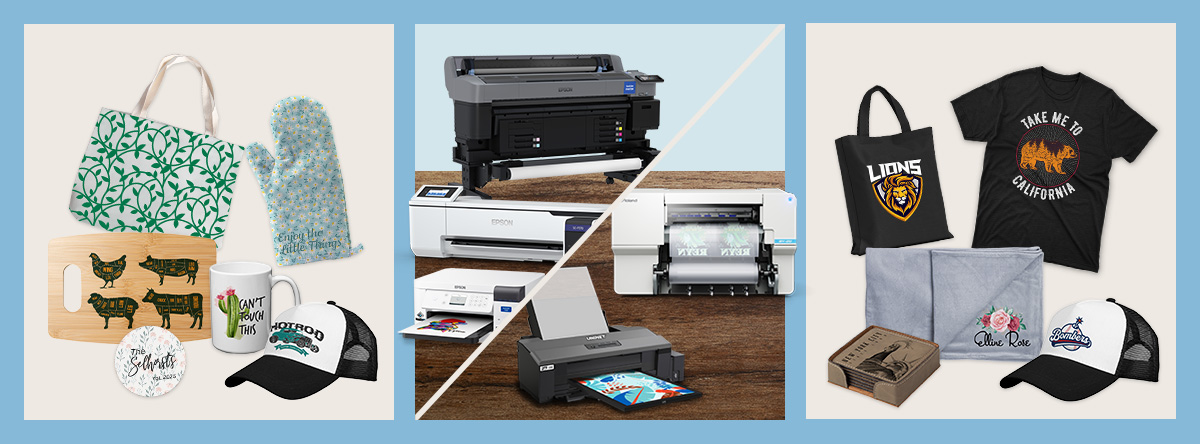
Sublimation printing and Direct-to-Film (DTF) printing can both provide full-color results on t-shirts and other substrates. They both offer scalable workflows and compatibility with heat presses but they serve very different business needs. If you’re deciding between sublimation vs DTF for small batches, this guide breaks down the differences in materials, costs, durability, and ideal use cases so you can invest with confidence.
What Is Sublimation Printing?
Sublimation printing is a scientific process that uses special inks that transition from a solid to a gas under heat and pressure, permanently bonding into a polyester or polyester‑coated surface. It can be used with both hard and soft substrates, as long as they are light or white in color and have a polyester coating.
Key Characteristics of Sublimation
- Requires polyester fabrics or polymer‑coated blanks
- Ink becomes part of the material (no texture)
- Extremely durable and wash‑resistant
- Best on light‑colored substrates
- Lower ongoing consumable costs
Common sublimation products include:
- Apparel (polyester shirts, athletic wear)
- Mugs, tumblers, coasters
- Home décor panels and plaques
- Ornaments and signage blanks
Because of its simplicity and low cost of entry, sublimation is often the first printing method adopted by home‑based and Etsy sellers.
What Is Direct-to-Film (DTF) Printing?
DTF printing involves printing a design onto a special film, applying powdered adhesive, and heat‑pressing the transfer onto nearly any fabric type or color. Unlike sublimation, you can print onto a black cotton t-shirt with DTF technology.
Key Characteristics of DTF
- Works on cotton, polyester, blends, and dark fabrics
- Produces a soft but noticeable surface texture
- Requires film, adhesive powder, and curing
- Excellent color vibrancy and opacity
- Strong stretch and wash durability when applied correctly
DTF has become popular for businesses that want maximum garment compatibility without maintaining separate workflows for light and dark apparel.
Sublimation vs. DTF for Small Batches
1. Setup Cost and Complexity
| Factor | Sublimation | DTF |
| Cost of Entry | Lower | Higher |
| Consumables | Ink + paper | Ink, film, powder |
| Learning curve | Beginner‑friendly | Moderate |
| Maintenance | Minimal | Moderate–High |
2. Material Compatibility
Sublimation excels when:
- You sell polyester apparel
- You specialize in drinkware or coated hard goods
- You want zero‑feel prints
DTF excels when:
- You print on cotton or mixed fabrics
- You offer dark or black garments
- You need one solution for varied apparel orders
This difference alone often defines which method is right for a business.
3. Durability and Feel
- Sublimation: Ink is embedded into the material. With sublimation, your print is resistant to cracking, peeling, or fading under normal conditions.
- DTF: High durability when applied correctly, but remains a surface layer that can eventually wear with heavy use.
For performance wear and a premium feel, sublimation is often preferred. For graphic fashion and branded merchandise, DTF offers more flexibility.
4. Color and Design Capabilities
DTF offers superior opacity, including white ink, which allows vibrant designs on dark fabrics. Sublimation delivers unmatched smoothness but is limited by substrate color.
From a design standpoint:
- Sublimation favors photographic or all‑over designs
- DTF favors logos, bold graphics, and branding
Which Is More Profitable for Small Batches?
For small batches, profitability depends on material type, order mix, and time investment.
Sublimation is often better if you:
- Sell repeatable product lines (mugs, tumblers, shirts)
- Work primarily with polyester blanks
- Want faster production with fewer consumables
- Operate from a home studio
- Want to print on hard and soft goods
DTF is often better if you:
- Accept custom apparel orders on many fabric types
- Print short runs of varied designs
- Need flexibility without vinyl layering
- Plan to scale into contract printing
Some businesses eventually use both, depending on the order type.
Choosing Based on Your Business Model
If your goal is entry‑level customization with predictable costs, sublimation is usually the best place to start.
If your goal is maximum garment flexibility and you’re prepared for a slightly more complex workflow, DTF offers broader application potential.
Final Verdict: Sublimation or DTF?
There is no universal “better” option, only the right tool for your products.
- Choose sublimation for simplicity, durability, and smooth finishes on poly‑based items.
- Choose DTF for versatility, vibrant color on any fabric, and expanded apparel offerings.
For many growing businesses, the long‑term solution is not sublimation vs DTF, but sublimation and DTF, each used strategically.