
Your Cart Total
{{price(cart.total || cart.subtotal_with_discount)}}
Add {{price(remainder)}} to qualify for free shipping*
You qualify for free shipping!*
Some items in your cart do not
qualify for free shipping.
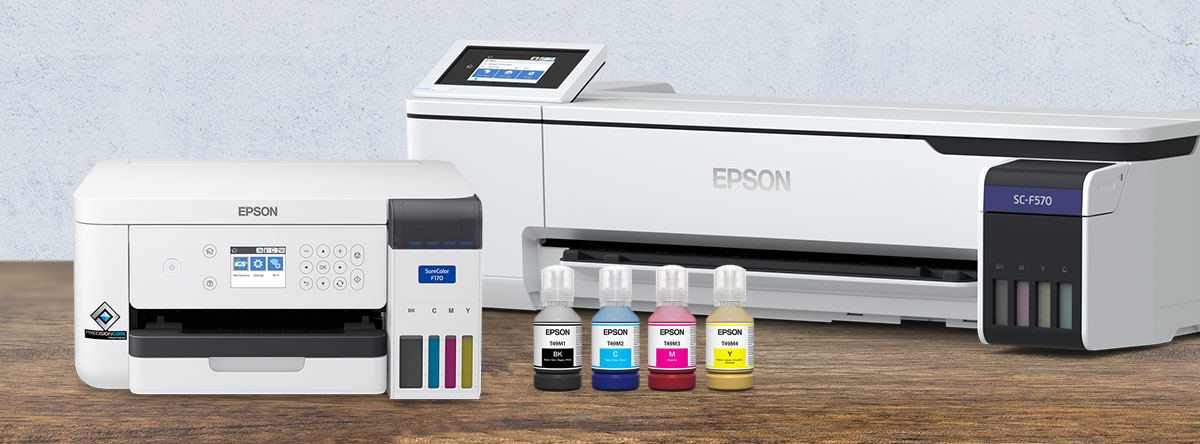
Long-gone are the days of clogged printer ink lines and murky prints. With global brands like Epson embracing the print industry, advancements in sublimation technology are moving at lightning speed. So if you’ve written off sublimation in the past or haven’t given it a chance yet, it may be time to reconsider what sublimation can do for you and your business goals.
Sublimation has come a long way since its inception, from more user friendly equipment to an improved environmental footprint. In addition to print outputs with vibrant colors and sharp details, new sublimation printers are designed to be more intuitive, less wasteful, and more efficient in space and energy consumption.
Printers like the Epson SureColor F170 are so intuitive to set up, you just have to plug in, pop in the ink cartridges, and you’re ready to print. No need for messy conversions or bulk ink refills, reducing the chance for spills and wasted products.
Additionally, sublimation inks are a water-based ink product, that are safer for the environment and formulated to minimize waste and maximize efficiency (better for the wallet and the planet).
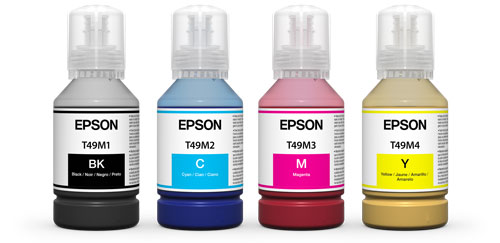
Overall, dye-sub ink has significantly improved within the last few years. New, high-density ink formulations and faster-drying inks have improved the print quality and print process. The inks clog less and reduce the risks of smudging, resulting in a more efficient workflow. The advanced inks offer a faster workflow and fewer misprints, while maintaining vivid print quality.
Moreover, the market’s increased focus on sustainability has led to inks engineered to produce minimal waste, aligning with the growing demand for eco-friendly solutions in the printing industry.
The integration of smart technology in printers has further enhanced the performance of dye-sub inks. With advanced software, users can achieve consistent results with less manual intervention, making the process more accessible to those new to sublimation.
Johnson Plastics Plus offers a complete solution for sublimation from printers, presses, blanks, and supplies. Our selection of dye-sub ink products includes popular brands like Epson, SwissJet, and ColorFusion. These inks are designed to work well with the most commonly used printer models on the market!
We recognize the value of each dollar our customer’s spend with us and work diligently to ensure our products are high-quality. This means testing is completed by our Customer Support technicians before any inks are approved for sale. If it doesn’t pass our test, we don’t sell it. So, whether you’re an expert sublimation user or just starting to learn, you can trust the dye-sub inks from Johnson Plastics Plus. When paired with the proper printer, presses, and blanks, our inks will give you the bold, durable prints you expect from sublimation technology.
The quantity and quality of dye-sub media have seen big improvements in recent years, driven by a need for enhanced performance and the desire for less waste. For example, there are several high-quality transfer papers that are engineered to reduce ink waste while still offering improved saturation and accuracy.
Along with papers that reduce waste, transfer papers dry quicker improving speed and efficiency by reducing the risk of smudging. Other medias beyond paper include silicone sheets, that can be used multiple times and reducing waste in the production process.
Advancements in coating technologies have led to the creation of transfer media that can better withstand the rigors of the sublimation process. These coatings enhance the durability of the final prints, making them more resistant to fading and wear, which is crucial for items that will experience frequent use or outdoor exposure.
As consumer demand for sustainable and high-performance printing solutions continues to grow, so does the ongoing innovation in transfer dye-sub media.
Johnson Plastics Plus offers thousands of sublimation-ready products ranging from sublimatable acrylic to home décor products. Whether you're looking to create custom mugs, personalized phone cases, or vibrant wall art, our extensive collection ensures that you’ll find the perfect fit for your creative projects. We pride ourselves on offering high-quality, durable substrates that pair perfectly with our advanced dye-sub inks, ensuring your designs are not only eye-catching but also long-lasting. Just like the ink products, all of our media and blank products for sublimation undergo a test before we introduce them to our customers.
Our product range includes innovative materials designed to enhance the sublimation process, such as sublimation sheet material for creative and sign application as well as sublimation-ready blanks for gifting, corporate solutions, and creative printing.
At Johnson Plastics Plus, we continuously update our selection to include the latest advancements in sublimation technology and media, helping you stay ahead in a competitive market.
As with most print technologies, there are positives and negatives, including the effects on the environment. However, the sublimation and personalization industry is continuing to improve where possible when it comes to sustainability initiatives. For example, Rowmark, a big name in engravable materials, has recently released an engraving product, EcoMark, that is made from 100% post-consumer recycled materials. As manufacturers, businesses, and consumers continue to prioritize green practices, the potential for dye-sublimation to become more sustainable will likely increase. By focusing on innovation and responsible production, the dye-sublimation industry can continue to thrive while contributing to a more sustainable future.
To get a better understanding of dye-sublimation and it’s recyclability, let’s take a closer look at the science of sublimation and what businesses can do to reduce their environmental impact.
The major benefit of sublimation printing is the durability of the final product. The bold, vibrant colors are resistant to chipping, fading, and scratching because dye-sublimation works by turning ink into a gas that bonds at the molecular level with a polyester surface or coating. Because the dye fuses into the substrate, it can’t be separated out later, which is what recycling facilities need to recover raw materials like clear polyester or metal. In short, most sublimated items aren’t recyclable.
Despite sublimated products challenges with recyclability, dye-sublimation is environmentally friendly in other ways. For example, dye-sub as a process doesn’t require water waste, sublimation inks are free from harsh solvents, and print-on-demand options mean you only print what you need, reducing overstock and landfill waste. When you design for longevity and print on recycled or responsibly sourced substrates, dye-sublimation can be part of a lower-impact production process overall.
Our production team has a box of kitty litter in the workspace. However, they don’t actually have a cat! Kitty litter is one way to reduce the environmental impact of ink by drying up ink before disposal. Overall, dye-sublimation offers waterless printing, reduced print-waste with on-demand options, and produces long-lasting, reusable products.
Overall, the sublimation process produces little ink waste as compared to other traditional printing processes. There’s no liquid ink runoff, making it cleaner and more contained. Additionally, the process is waterless, unlike textile dying or screen printing and the capability for on-demand printing reduces over production. Lastly, the process is energy efficient when compared to some alternative print methods. While heat presses require power, the overall energy usage is often lower than wet-dyeing or screen-print setups that involve multiple drying and curing stages.
There are a few environmental disadvantages to sublimation including the inability to recycle polyester content, paper waste, and energy consumption. However, there are ways to reduce this impact, like with reusable silicone sheets, which can be used multiple times and significantly cut down on paper waste. By opting for these durable alternatives, you also enjoy cost savings in the long run. Additionally, advancements in energy-efficient heat press machines are helping to minimize power consumption, making the entire sublimation process more sustainable.
Educating customers about the benefits of sublimation products and their long-lasting nature can foster a culture of mindful consumption. Encouraging consumers to appreciate the durability and quality of sublimated items can lead to a decrease in the demand for disposable products, thereby reducing overall waste.
Ultimately, while challenges remain, the dye-sublimation industry is making strides towards a more sustainable future. By embracing innovative solutions and prioritizing responsible practices, we can continue to enjoy the vibrant possibilities of sublimation while caring for our planet.